Case study · Independent product
Helping friends choose where to meet
What We Do turns location choices into a group vote. I designed and built it with Chad Montoya after surveying 41 people about the decisions that stall their plans.1
One friend starts a hangout, everyone swipes through options, and the group sees the result together.
Role
Product designer and frontend engineer
Timeline
Fall 2025
Team
Chad Montoya and me
Tools
Figma, Figma MCP, Claude Code, SwiftUI, Google Maps API, Supabase
Context
Independent product · social coordination
03 · AT A GLANCE
Research, impact, and lessons.
41
people surveyed about coordinating plans
85.4%
struggled to choose a convenient location
3
home-screen rounds to clarify the action
Of 41 survey respondents, 85.4% struggled to choose a convenient location and none used a planning app, so we focused on deciding where to meet.1 I designed the voting flow and simplified Home with Chad Montoya. Price and distance inform each vote, though improvements in coordination remain unmeasured. The lesson: test one complete decision with real friend groups before adding features. The next test is whether a group can finish a vote, including when someone goes quiet.
04 · WHERE PLANS STALL
Friends had messaging apps. They still couldn't pick a place.
None of our survey respondents used a planning app. Scheduling tools addressed when to meet; event tools assumed the group had already chosen where. We focused on the decision between those two steps.1
85.4%
struggled to pick a convenient location
0%
used any planning app to coordinate
3.56 / 5
average satisfaction with coordination
05 · FROM SURVEY TO VOTE
Make the trade-offs visible before friends commit.
The survey pointed to small groups making plans only days ahead. Budget affected about a third of groups, and distance fairness was a concern for 64%. I put price and distance on the voting card so friends could weigh both before choosing.1
The flow gives each person the same task: vote on one place at a time. Saved spots supply familiar options, and the home screen keeps active and decided plans together.
06 · THE DECISION
A swipe replaces another round of messages.
Each card shows a location, price range, and distance. The result appears after the last vote; ties favor the option fairest by distance. That rule connects directly to the survey's concern about who has to travel farther.
Importing saved places helps a friend propose spots they already know. “Start a hangout” stays the main action on Home, with active, decided, and upcoming plans below it.
07 · SIMPLIFYING HOME
Three versions made room for one main action.
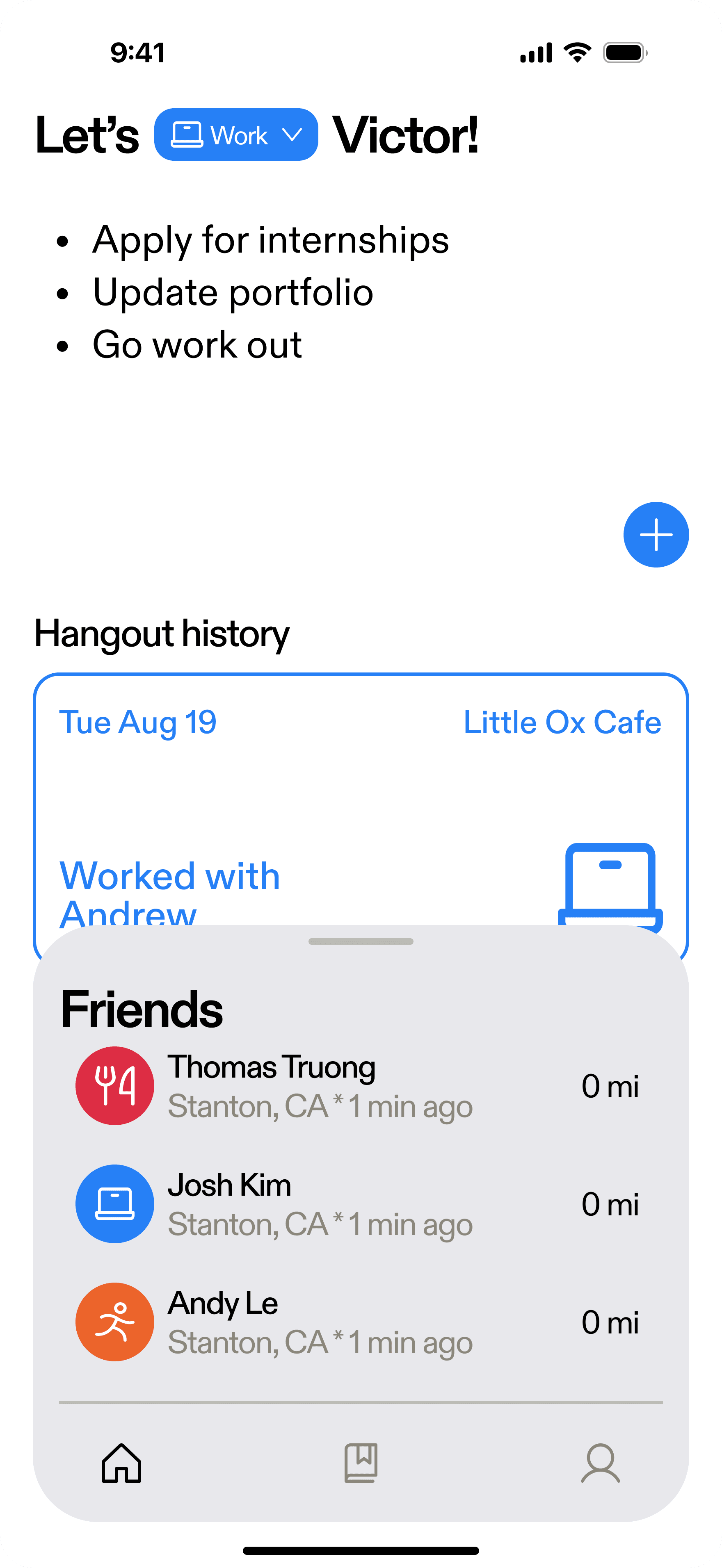
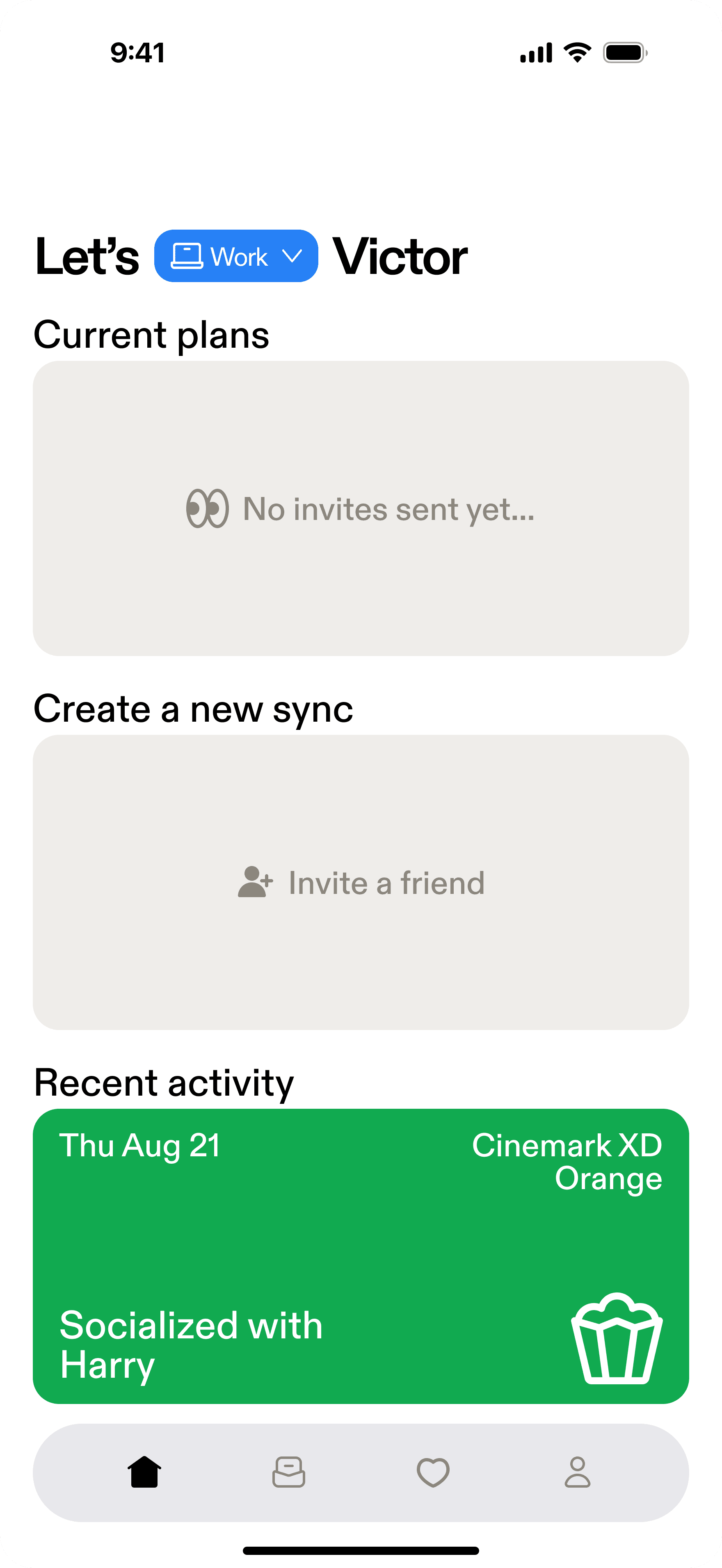
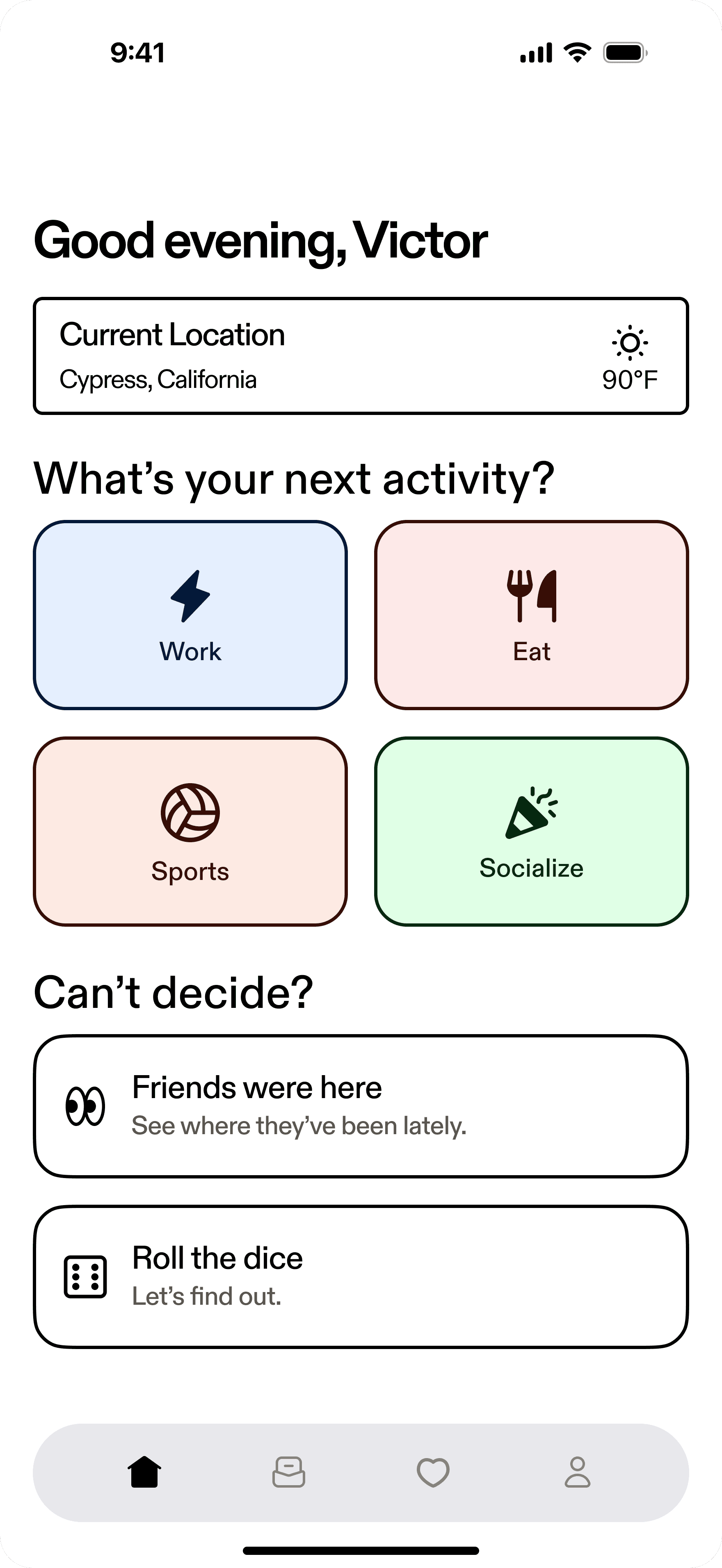
The first home screen showed every plan and friend at once. The second grouped plans by state but still had competing priorities. In the third, I made starting a hangout the primary action and simplified the list beneath it.
These are design iterations; the survey does not establish that the final layout or voting flow works better in use.
08 · NEXT TEST
Can a real group reach a decision?
The survey established a coordination problem. The next step is to test the full vote with friend groups and observe whether they reach a location decision, including when someone does not respond.
I would run that test before expanding imports or adding calendar features. The project's clearest lesson was to keep the work centered on one shared decision. Reduced coordination difficulty and higher satisfaction remain targets, not measured outcomes.
09 · SOURCES
Sources
- Tran, Victor, and Chad Montoya. Survey of 41 respondents on social habits and coordination pain points, Fall 2025. Internal; questions and raw responses available on request.