Case study · Teague / UCI capstone
Helping mission planners choose a repair
Orbit is a Teague / UCI capstone concept for Flight Activities Officers, who build and revise a crew's schedule. I designed the conflict-detection and resolution flow: see the broken rule, compare repairs, and confirm a change.
Role
Product designer · Stages 4–5 of the FAO flow (detect conflicts, resolve)
Timeline
Capstone · Jul–Sep 2026 · in progress
Team
Team Rocket with Teague
Tools
Figma, React prototype, SPIFe and Playbook literature
Context
UCI capstone with Teague · Mission operations planning
03 · AT A GLANCE
Research, impact, and lessons.
23.8%
of flexible HERA activities rescheduled
2
journey stages: detect and resolve
4
rounds of prototype iteration
HERA research showed that many schedule repairs were small time shifts, and an expert interview narrowed the concept to comparing repairs.16 I designed conflict detection and resolution around a shared week preview. It is a capstone concept, not a NASA product, and has not yet been tested with planners. The lesson so far: give AI a specific job, keep confirmation with the planner, and test the repair decision before refining the product around it.
04 · THE SCHEDULING PROBLEM
Two activities need the same equipment. What moves?
In NASA's HERA Campaign 6 analog, crews rescheduled 23.8% of flexible activities.1 Building a week-long ISS plan can take several days, so a local conflict sits inside a much larger coordination effort.2
We scoped Orbit to two stages of the planner's journey: detecting a conflict and resolving it. The working prototype uses access code 1007.
05 · CHOOSING THE SCOPE
Most repairs were small moves worth comparing.
HERA research showed crews shifting start times, pulling tasks forward, or pushing them back.1 That suggested a focused opportunity: help a planner compare repairs while keeping the affected schedule visible.
Team Rocket considered six directions using published research and a scheduling-expert interview.6 We selected constraint visualization and assisted resolution. Resource matching could use ordinary search, historical analysis lacked a dataset, and creating constraints would introduce another workflow.
06 · THE PROPOSED FLOW
Show the conflict beside the activity being scheduled.
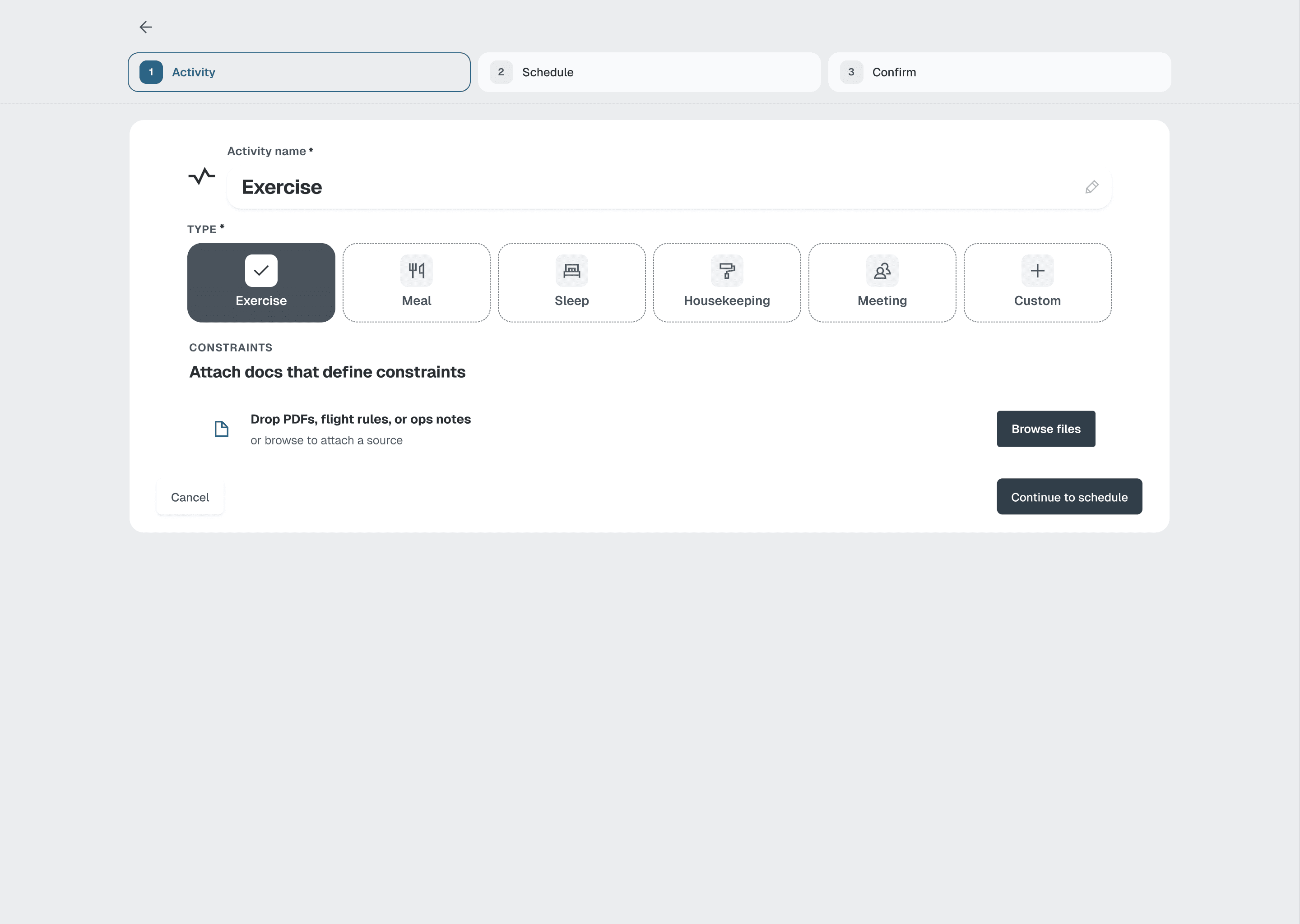
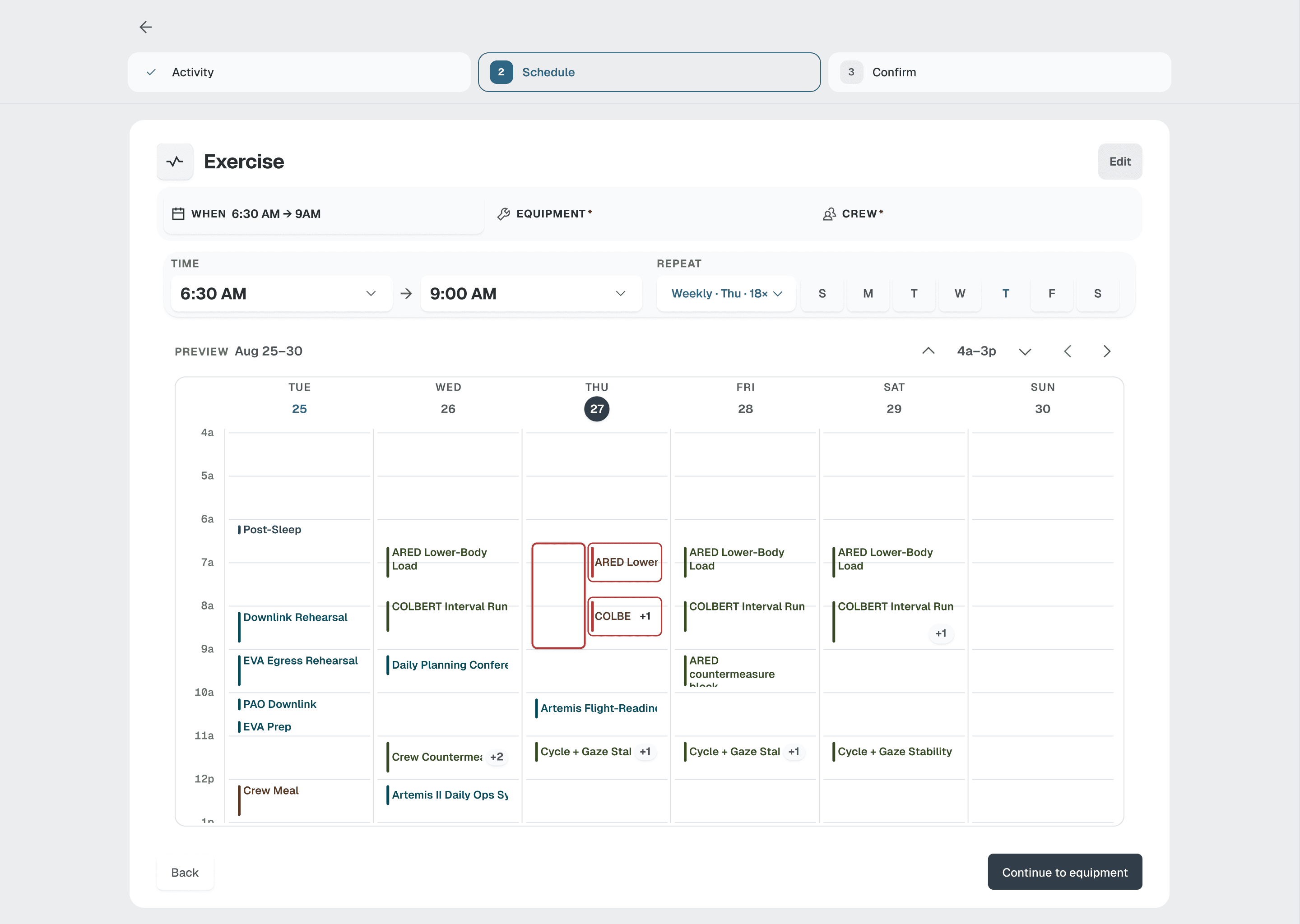
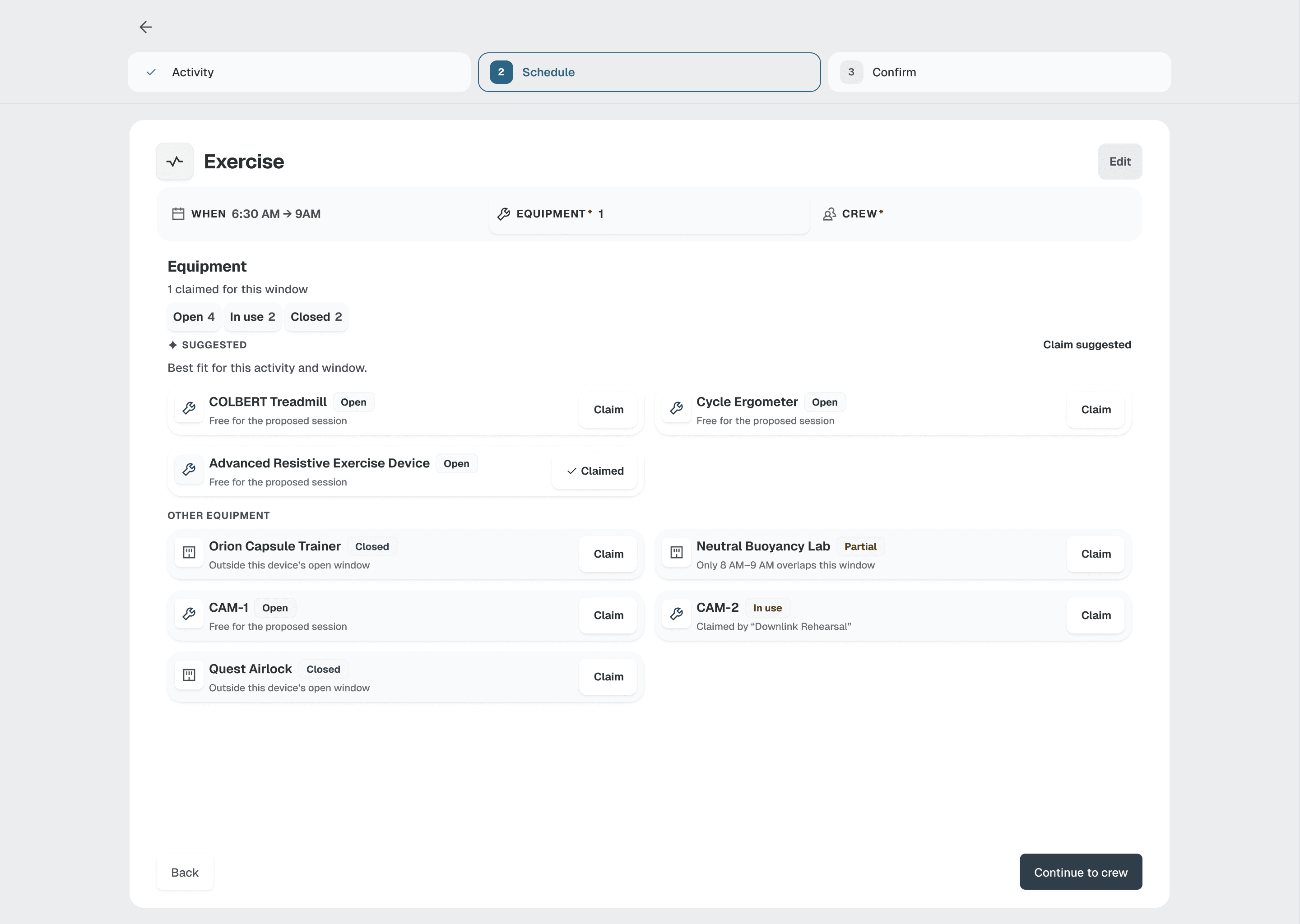
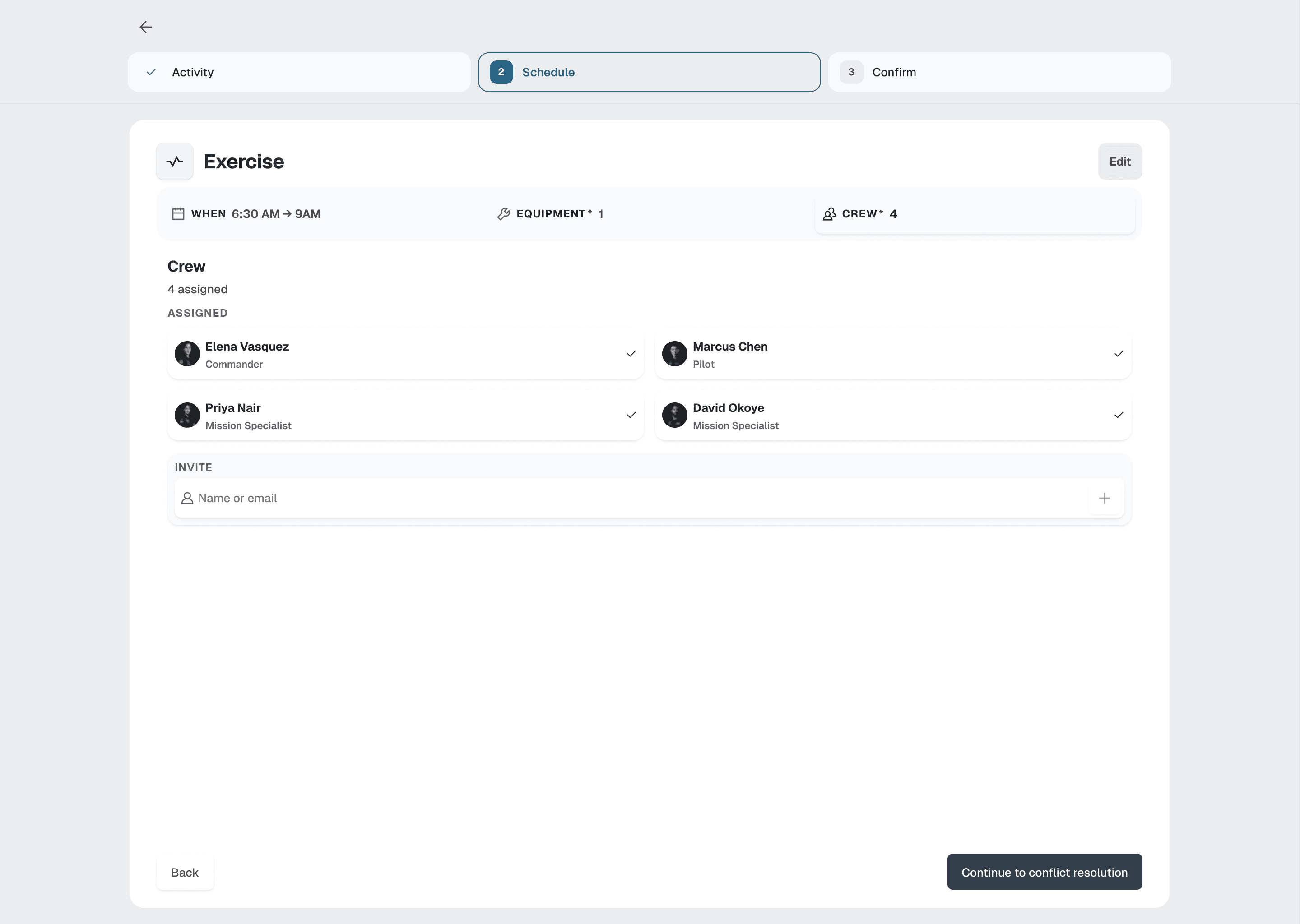
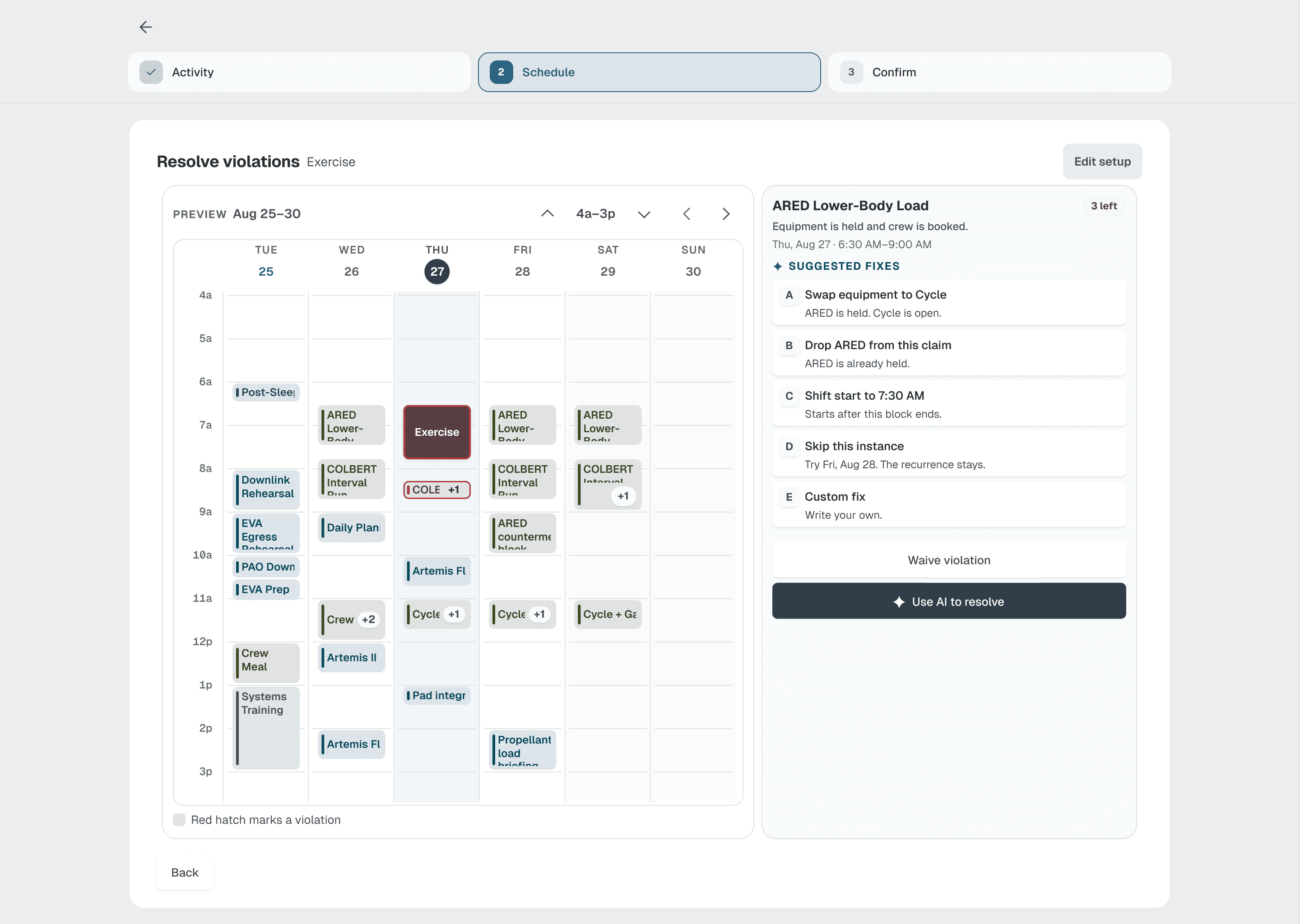
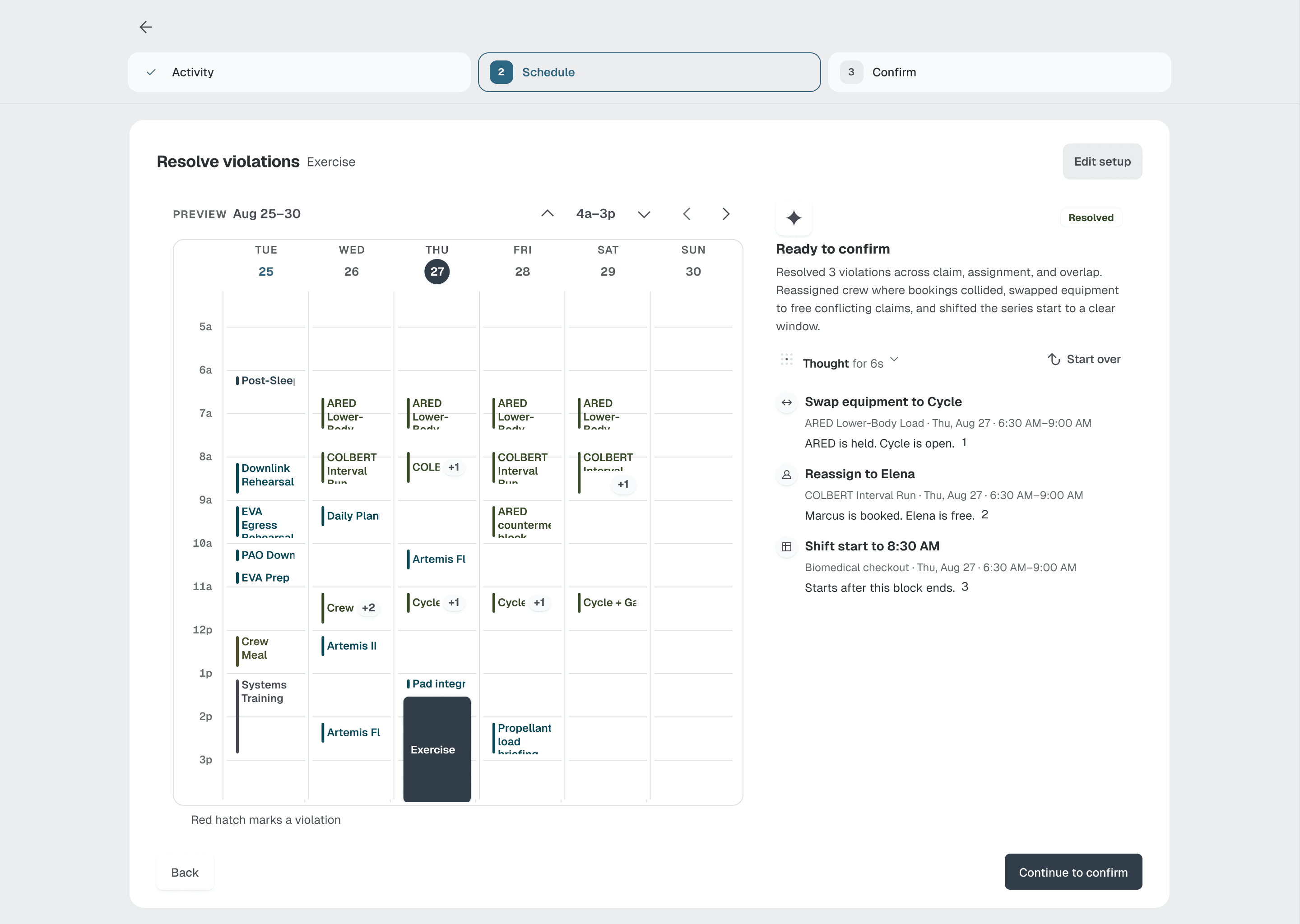
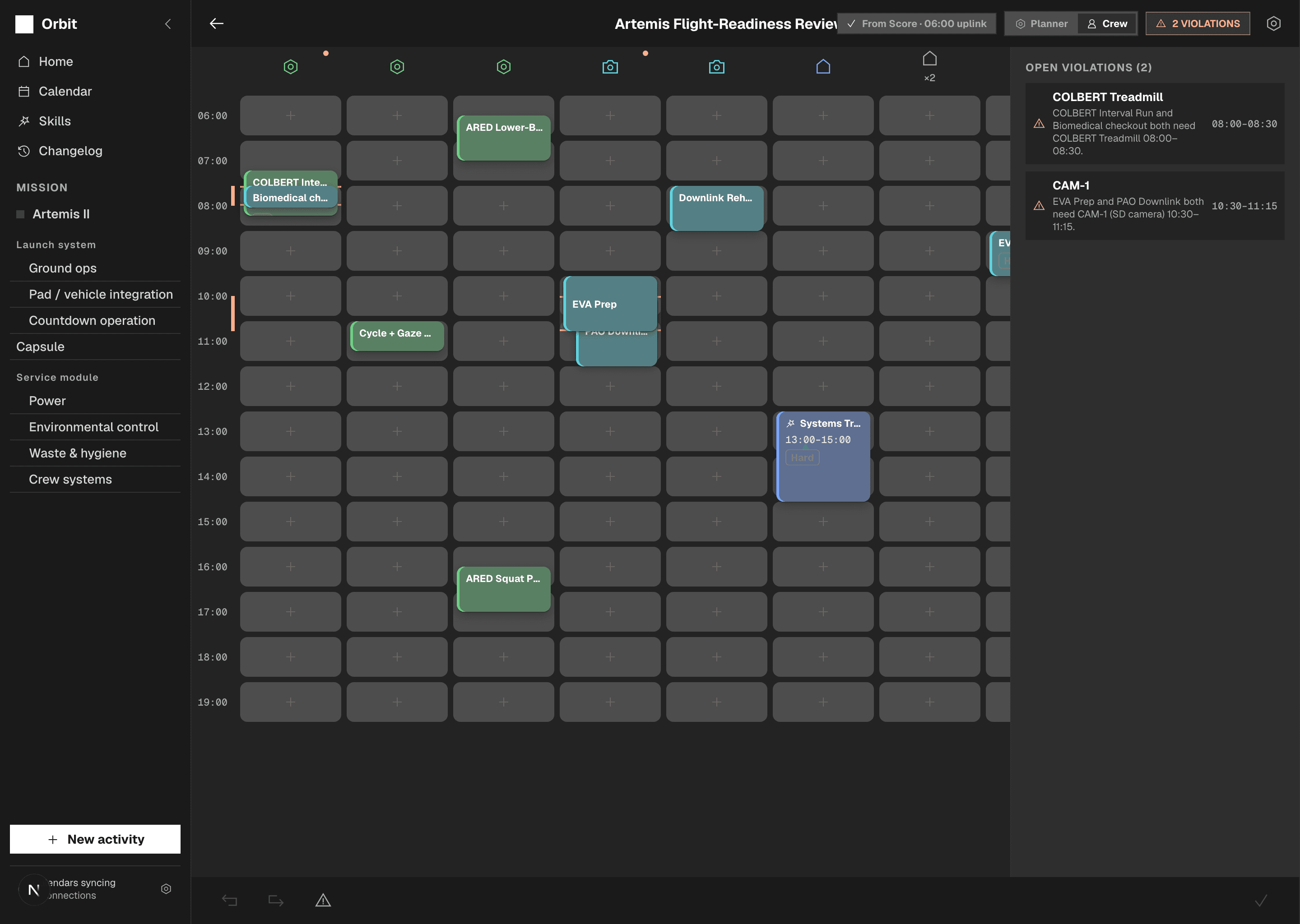
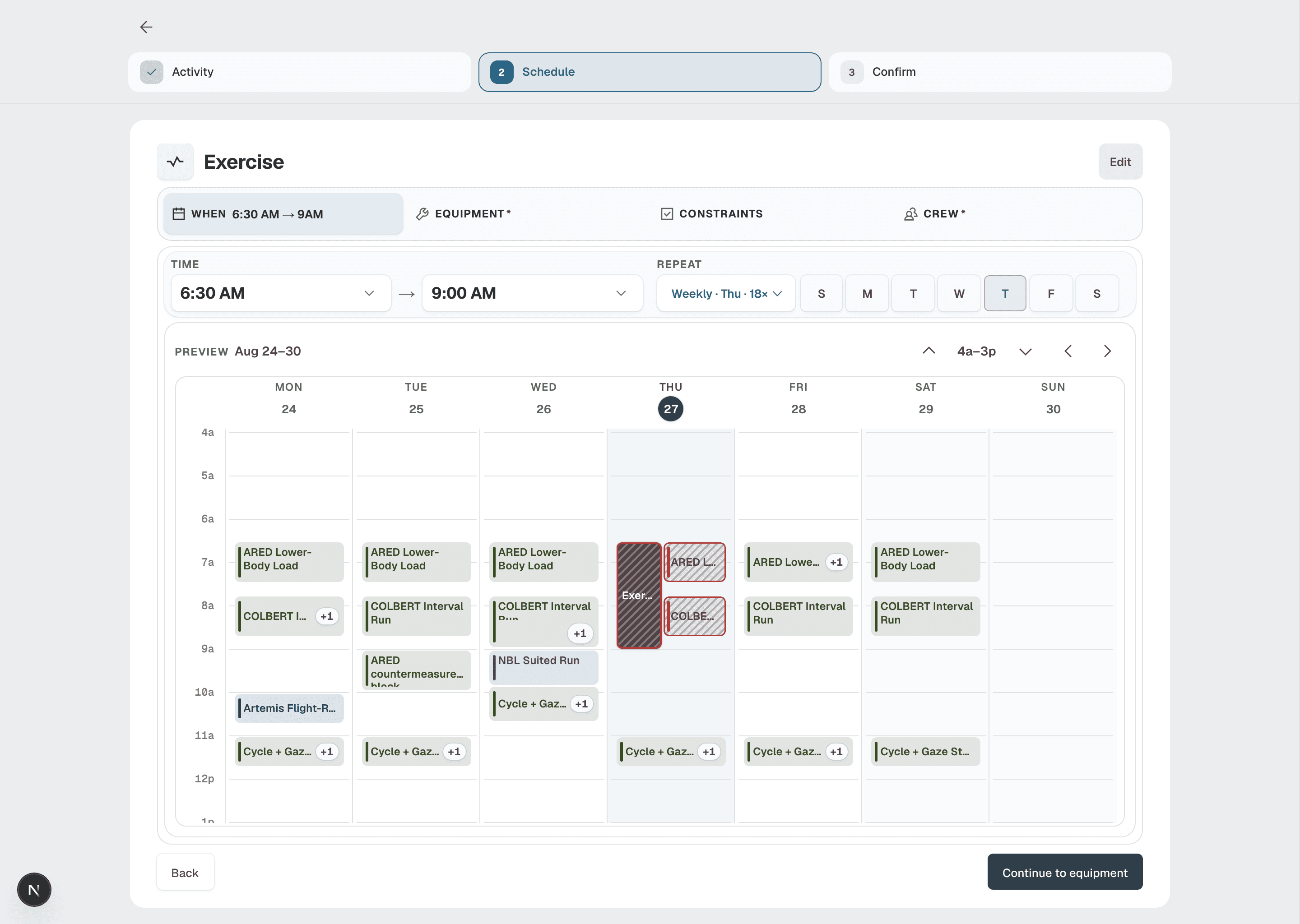
The planner defines an activity, places it in the week, and resolves collisions before confirming. The preview marks conflicting instances as the schedule changes, keeping the broken rule close to the activity it affects.
Make repairs comparable
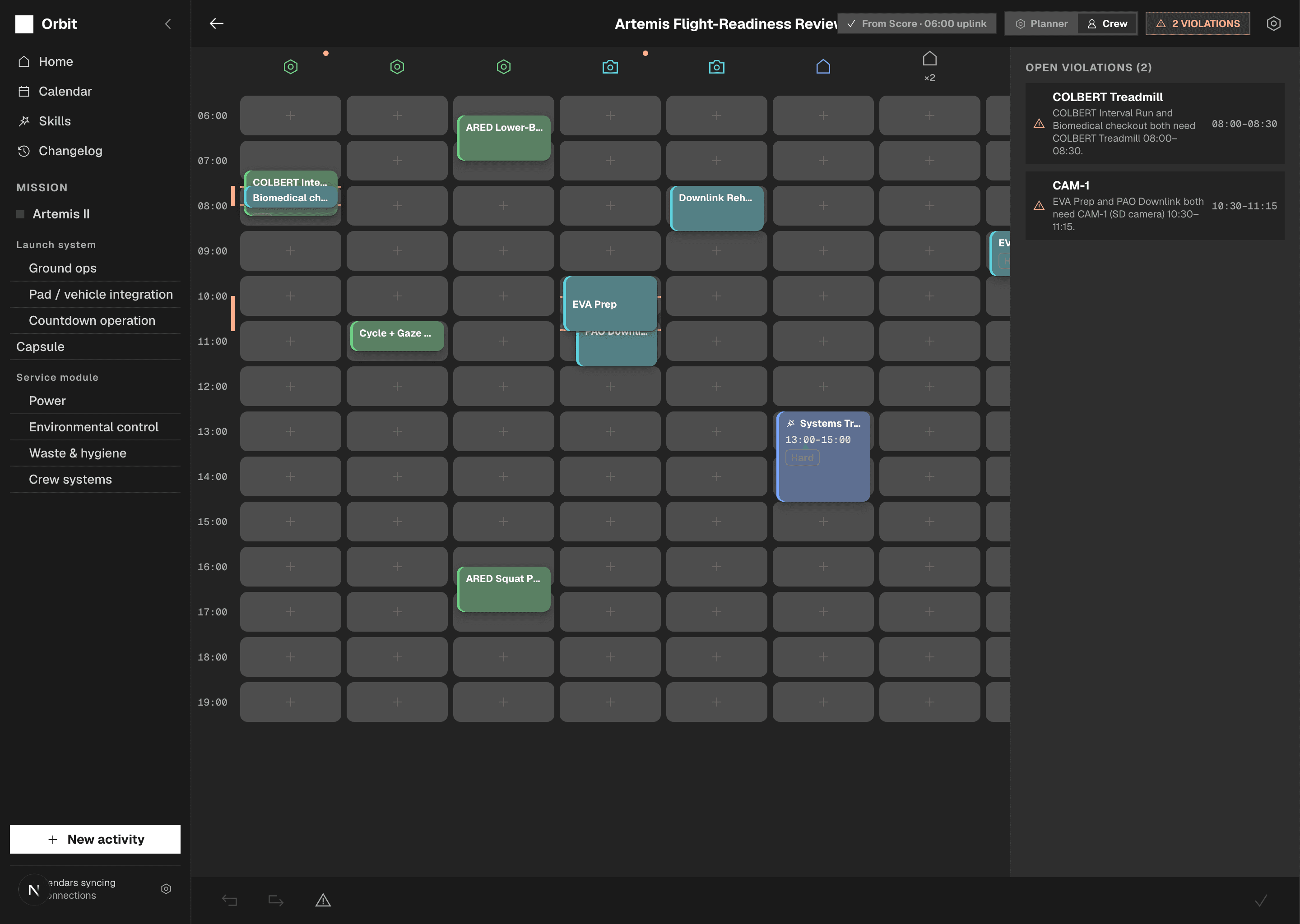
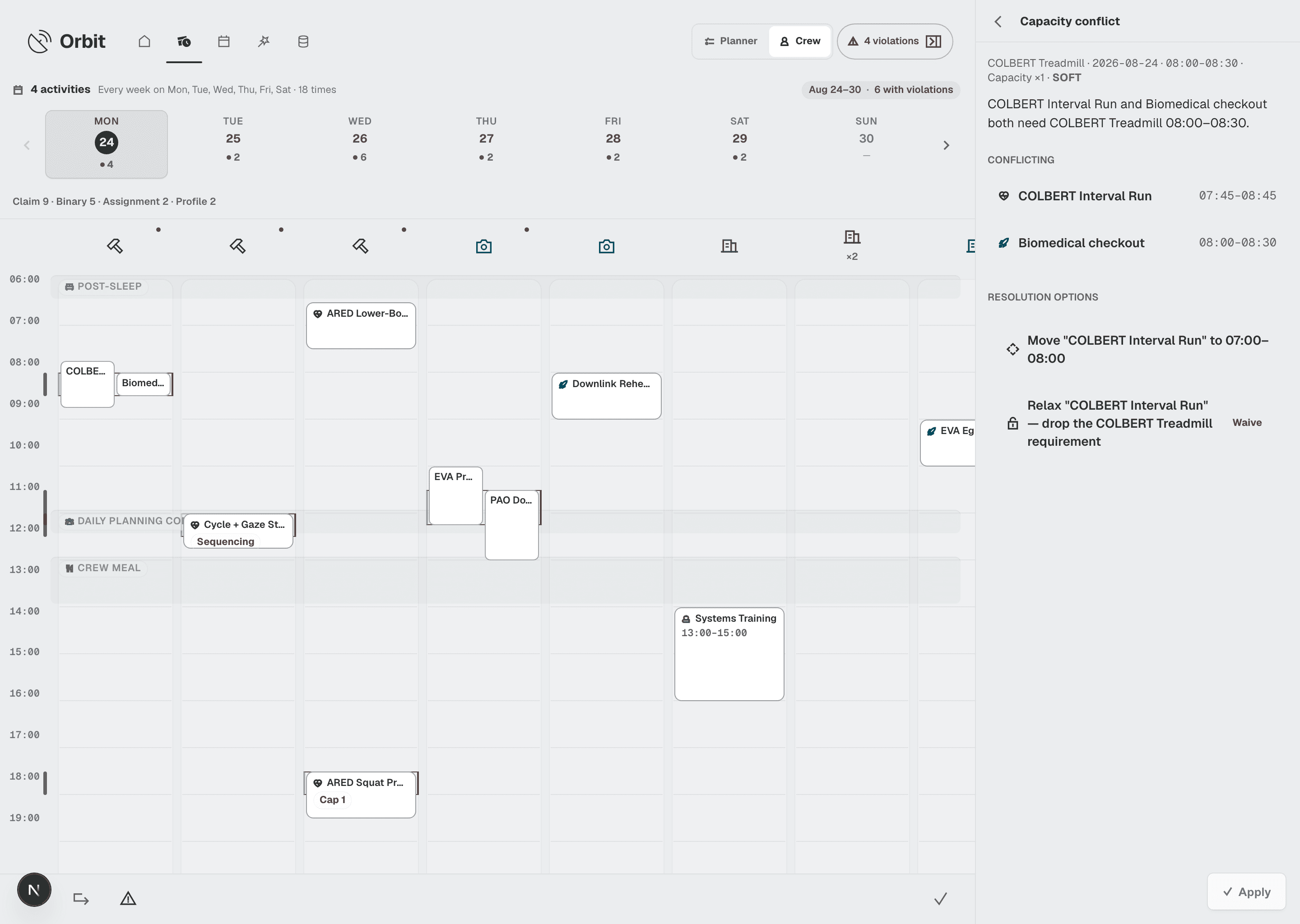
Each violation has a name, a reason, and a time window. Lettered options let the planner compare equipment swaps, time shifts, and other repairs. Waive stays visible because mission planners sometimes relax constraints deliberately.4
Confirm the change deliberately
The receipt lists proposed fixes and explanations alongside the updated preview. The planner can continue to confirm or discard the draft. Capturing a waiver's rationale is still a next step.
07 · THE TRADE-OFF
One extra confirmation keeps the planner in control.
SPIFe and Playbook already describe violations and support planning decisions.4-5 Orbit's design question was how to bring explanation and repair together, not how to replace those systems.
Automatic repairs would save clicks, but they would also change the schedule without a deliberate decision. I chose a proposal-and-confirm flow, accepting that extra step so the planner retains authority over the plan.
08 · NARROWING THE INTERFACE
Four rounds moved the schedule out of the chat.
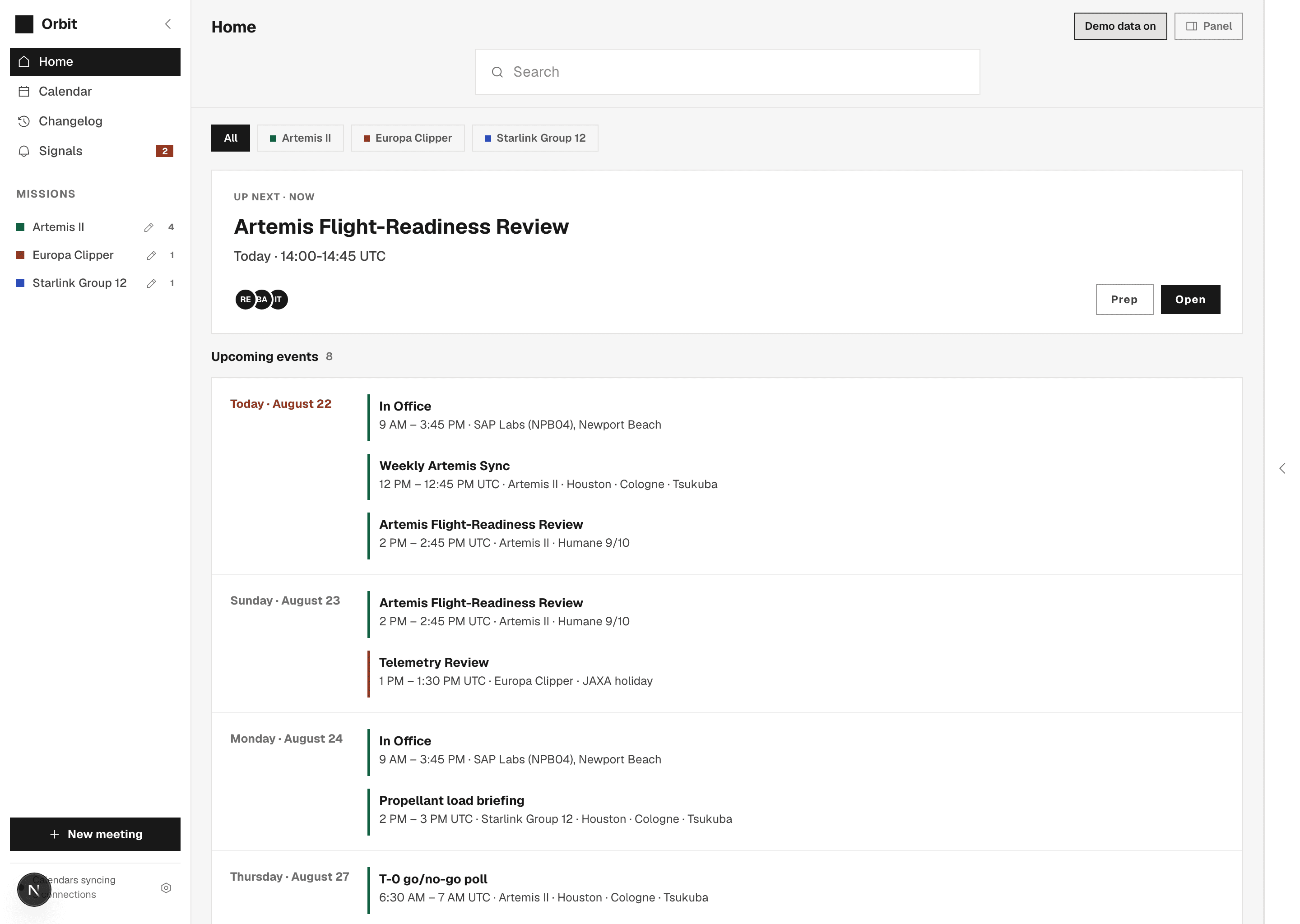
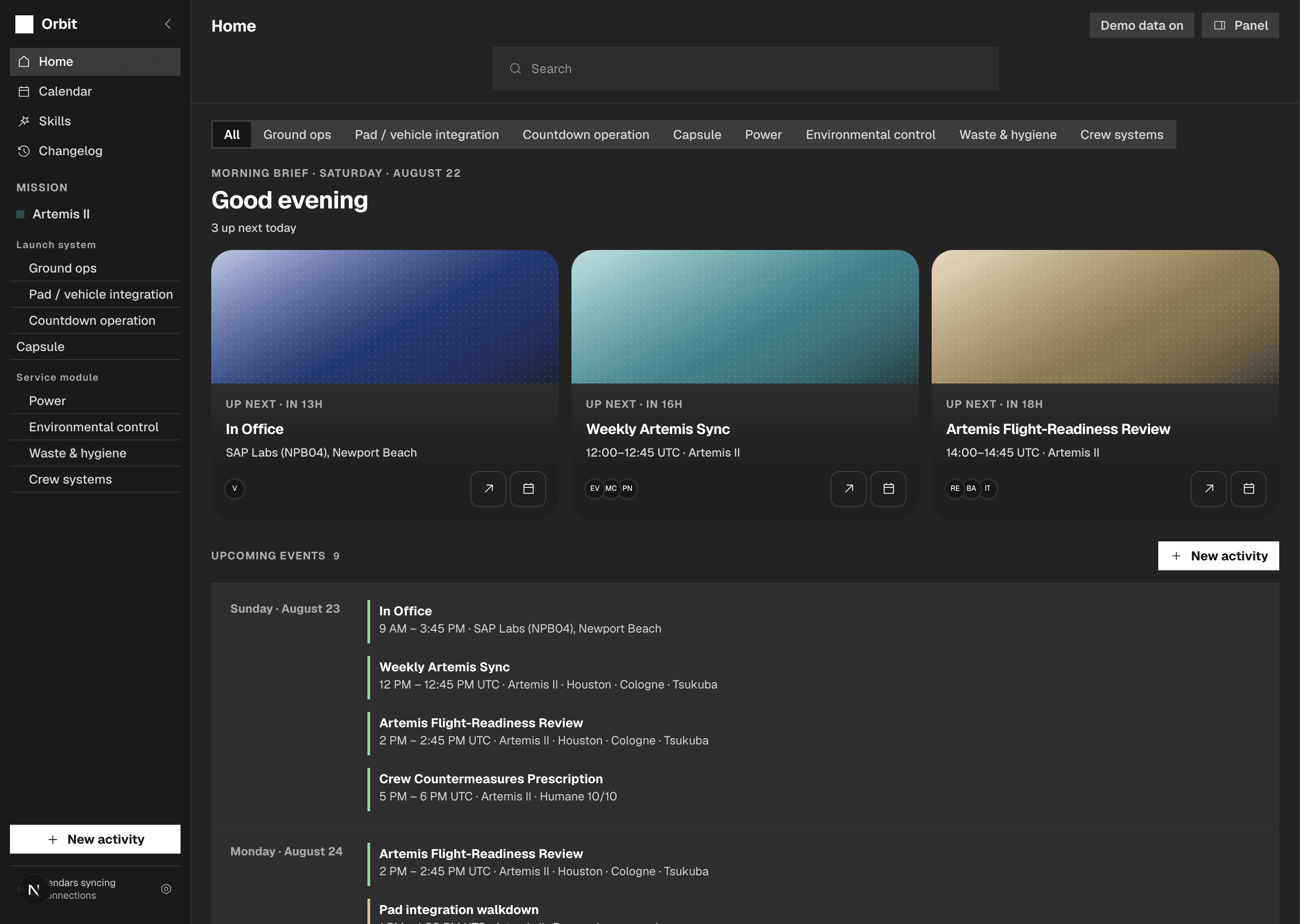
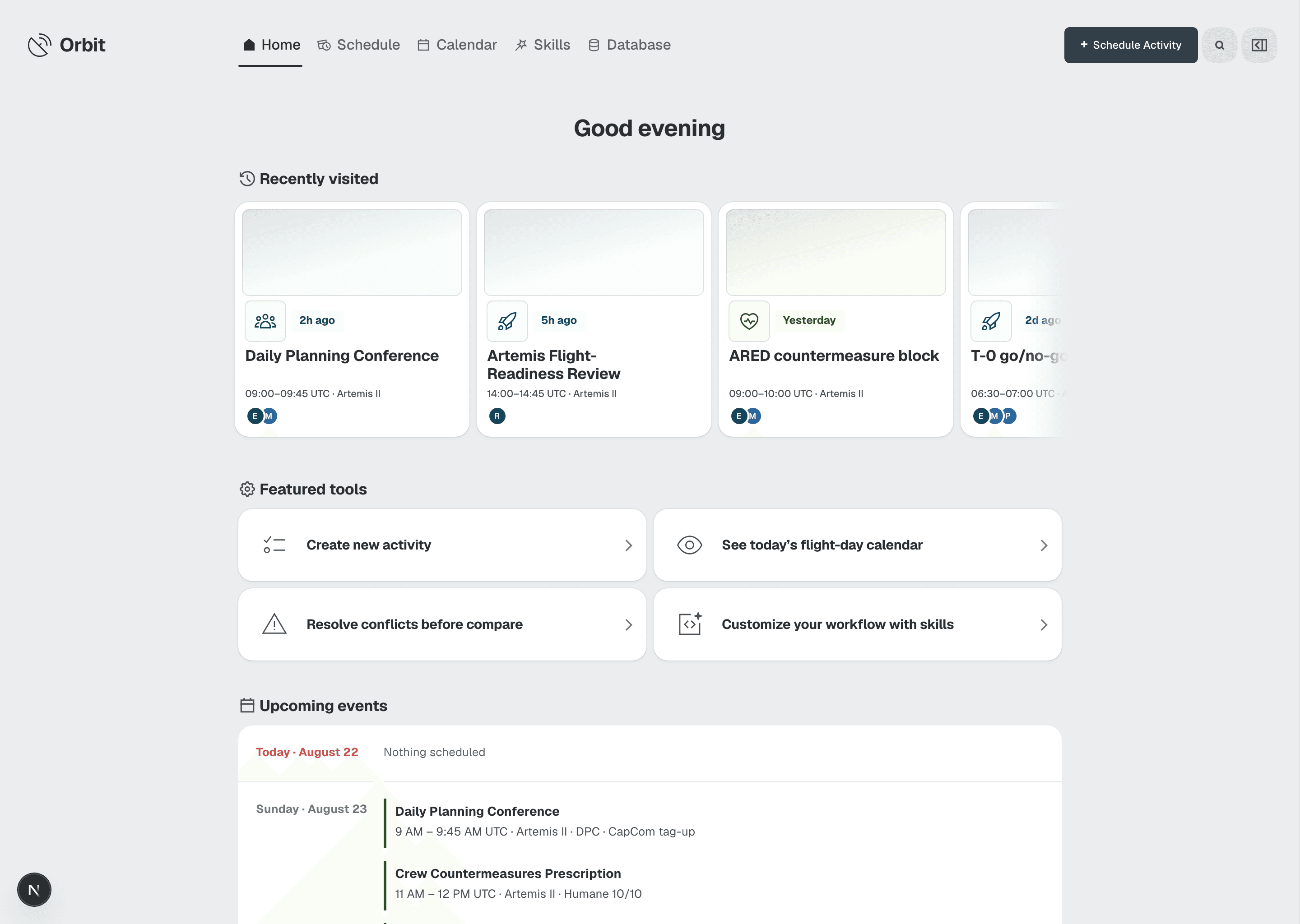
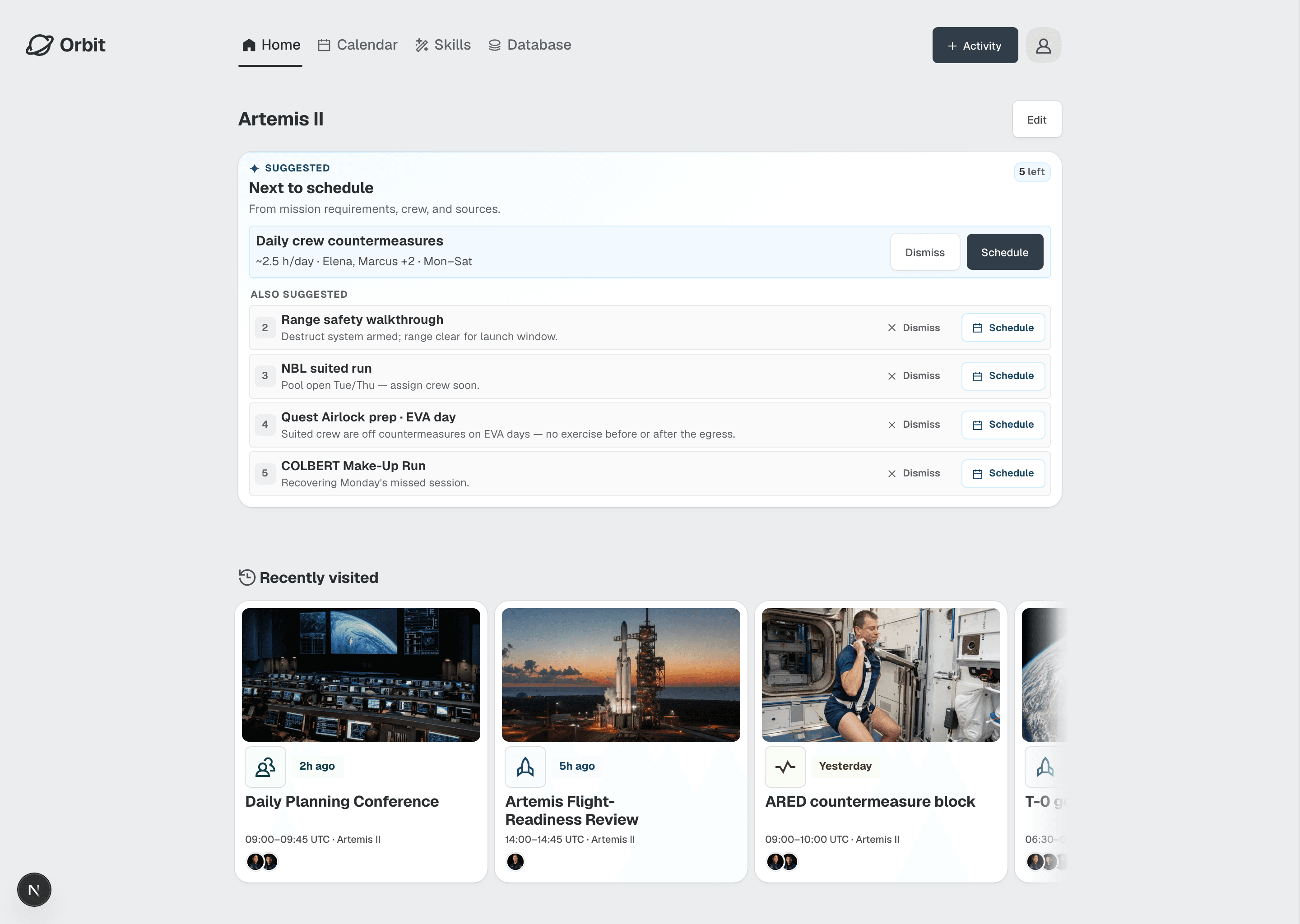
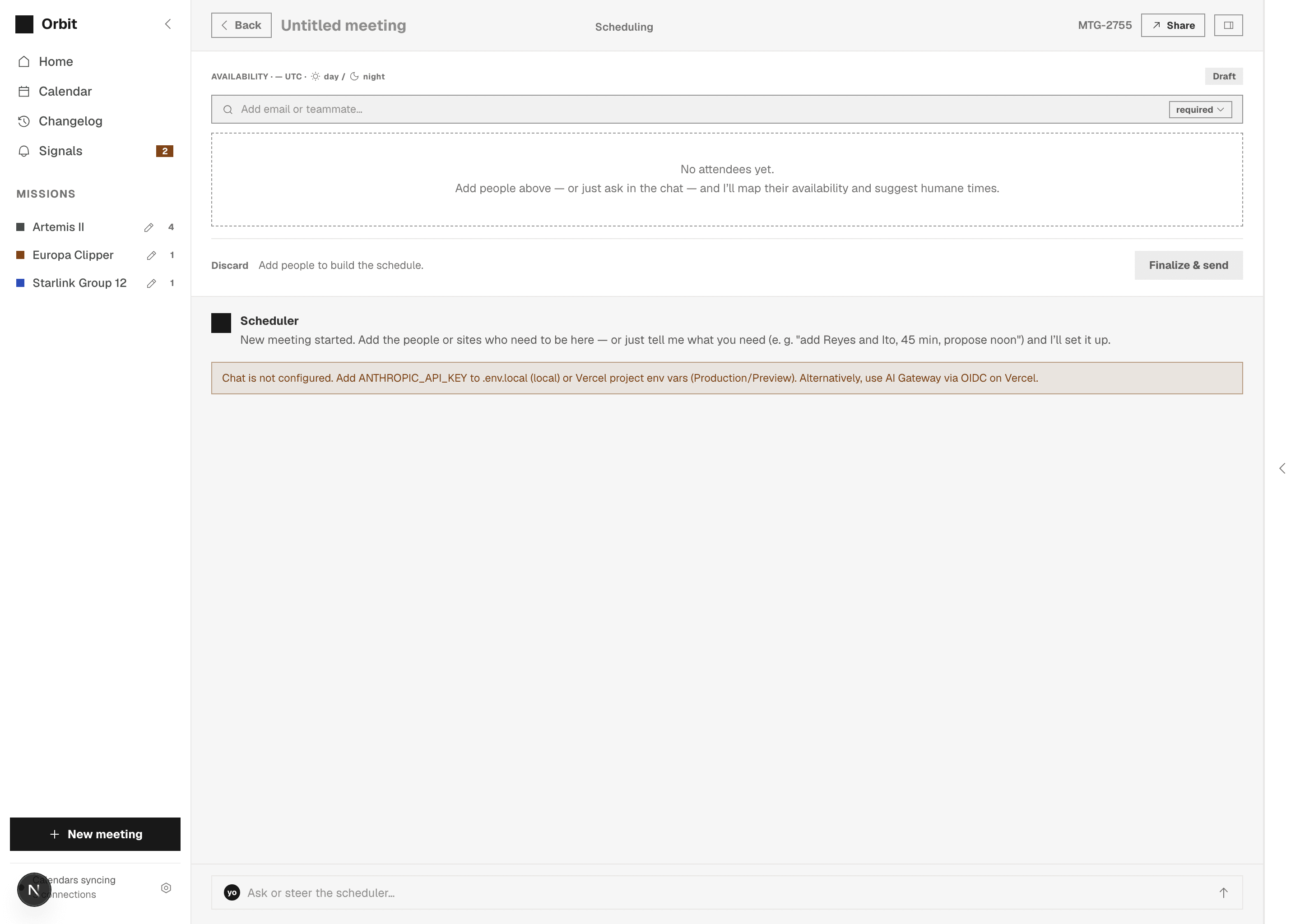
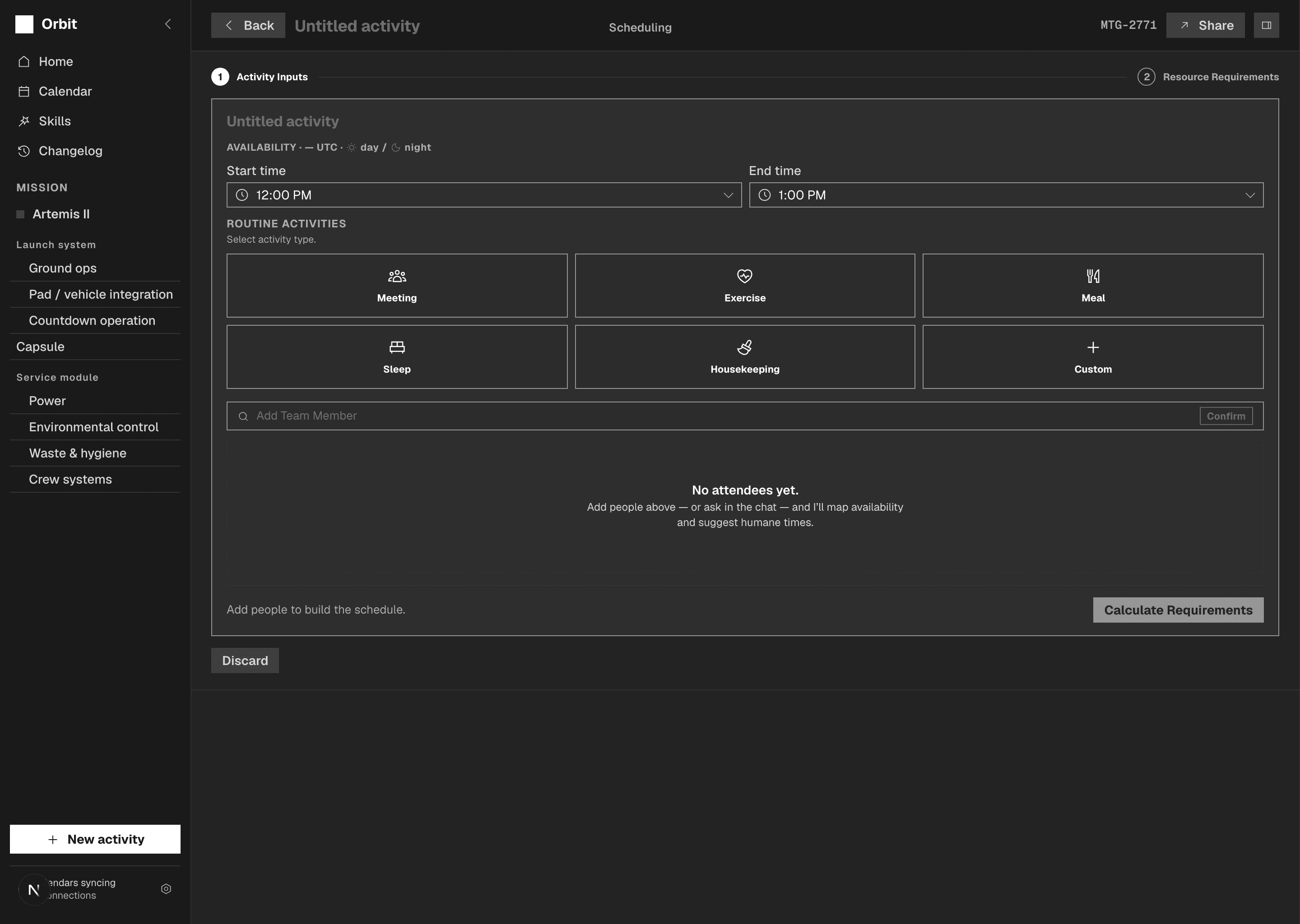
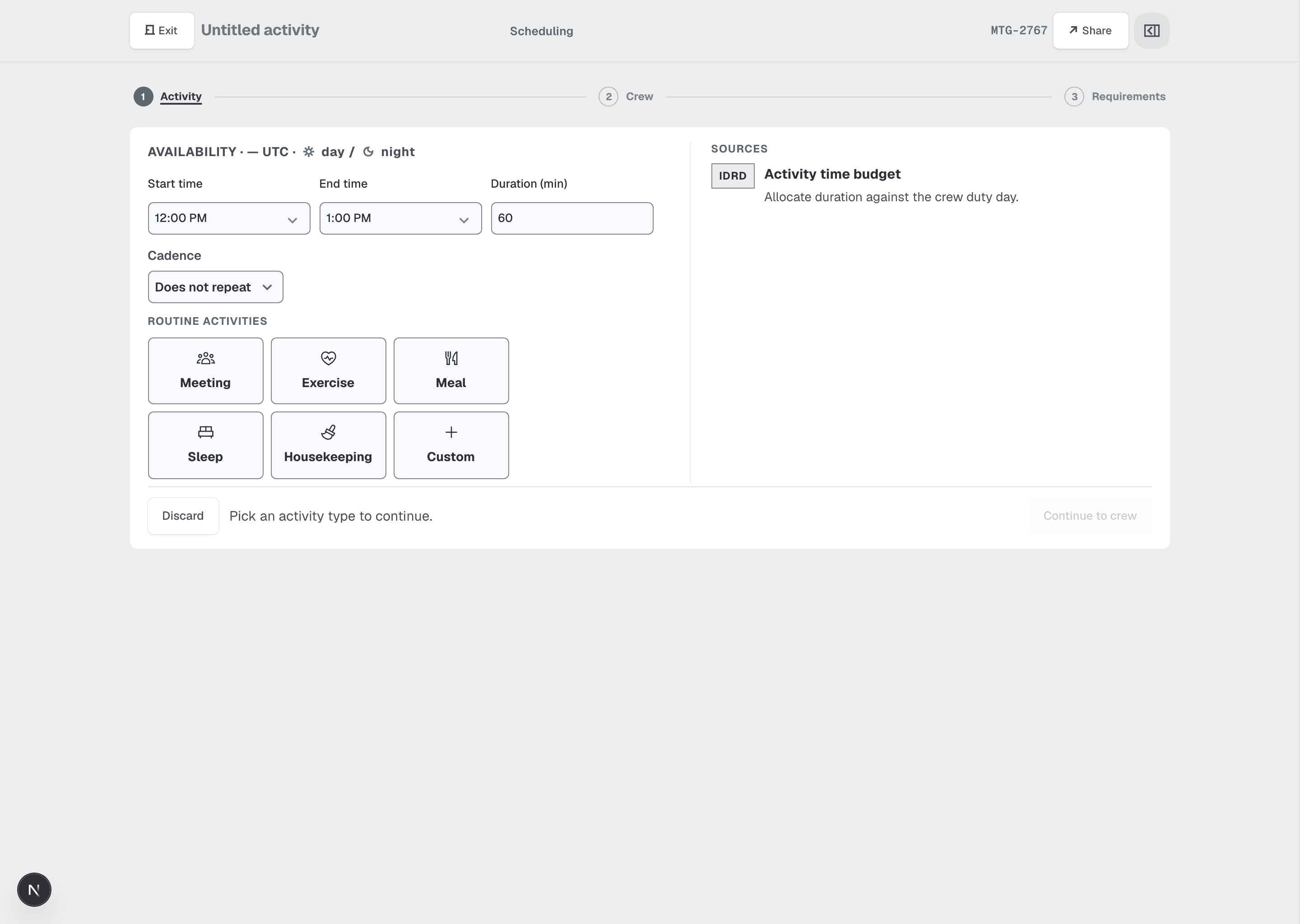
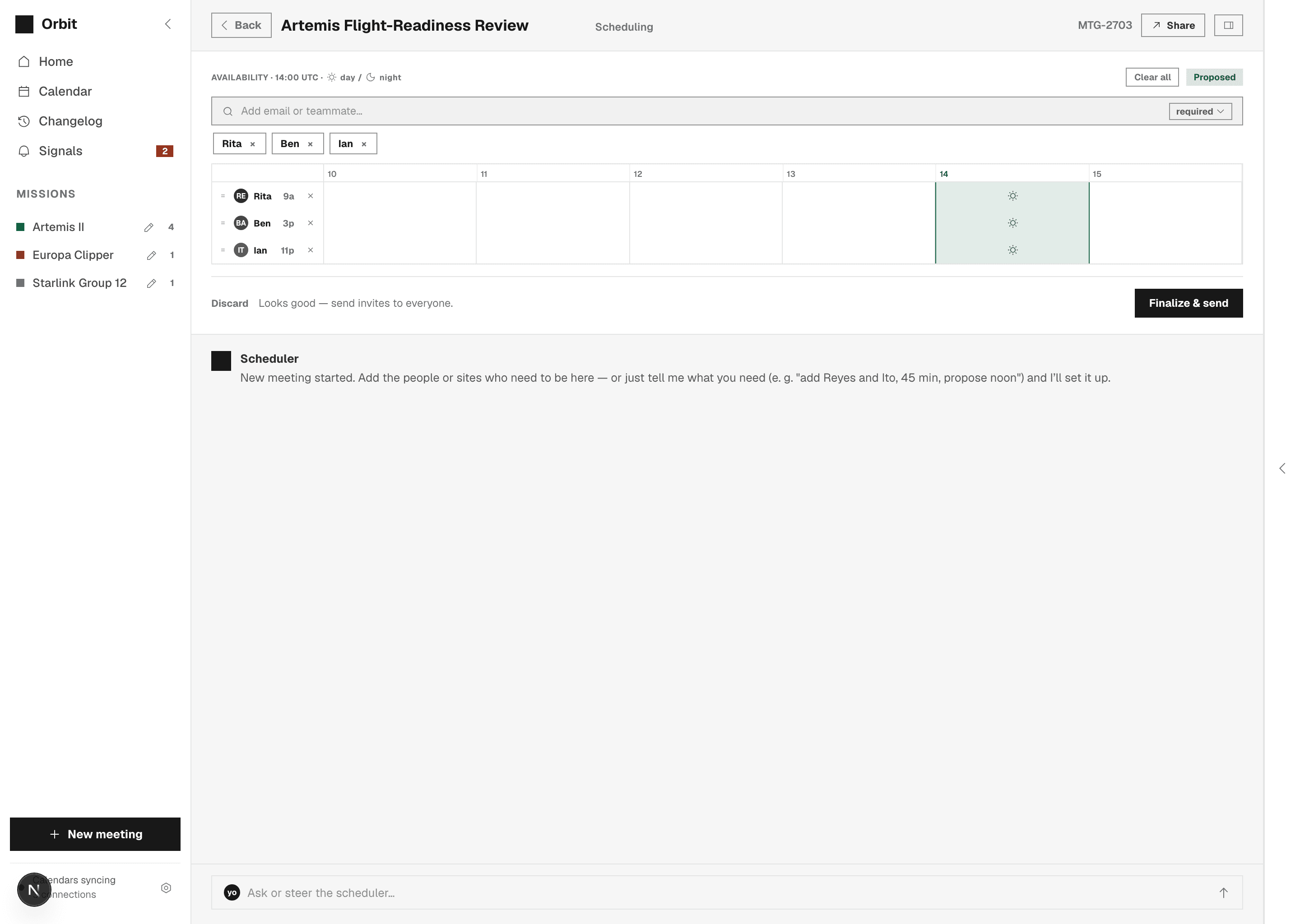
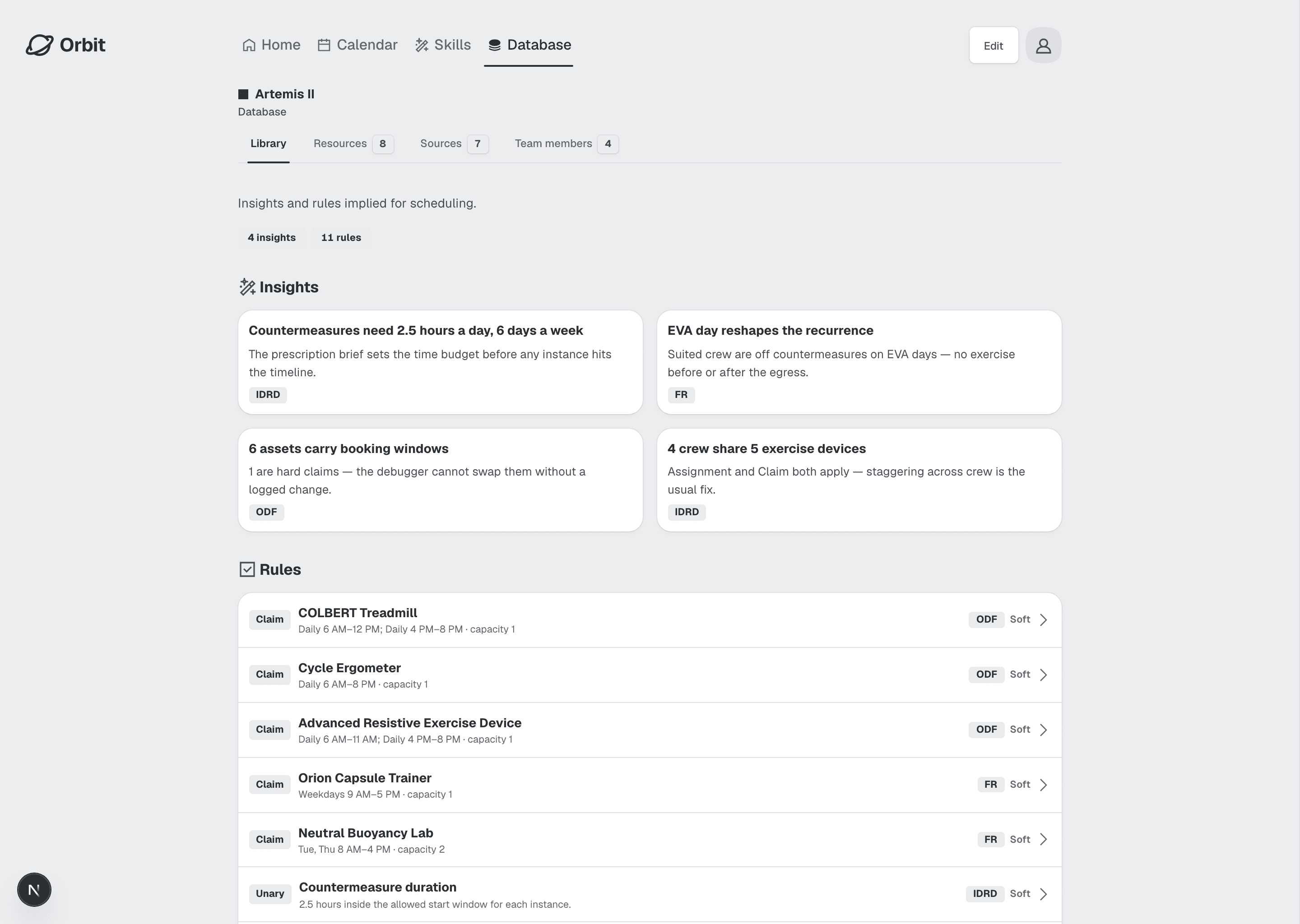
The early conversation view hid the plan it was changing. Across four rounds, the team moved toward a focused activity form, a live week preview, and an AI role limited to proposing repairs. The comparison below shows those changes across the shell, activity flow, and resolution tools.
09 · WHAT NEEDS TESTING
Can a planner judge the repair confidently?
The prototype demonstrates the proposed flow; it has no usability or operational results yet. I would test whether Flight Activities Officers can identify the broken rule, compare a repair with a waiver, and use the receipt to decide whether to confirm.
I would also test the conflict markings before refining more surrounding screens. Narrowing the project to one planner's decision made the design clearer; the next round should establish whether it makes that decision easier.
10 · SOURCES
Sources
- Abbott, Karasinski, Marquez, Characterizing spontaneous self-scheduling in NASA's HERA Campaign 6, IEEE Aerospace 2025.
- Hillenius, Marquez, Korth, Rosenbaum, Evaluation of crew onboard planning: year 2, NTRS 20180000770.
- Marquez, Hillenius, Healy, CAST slides, NTRS 20180005211.
- McCurdy et al., SPIFe, ICAPS 2011.
- Marquez, Shelat, Karasinski, HERA C6 slides, NTRS 20220013438.
- Team Rocket, internal synthesis of a scheduling-SME interview, July 2026.